
Mon–Fri 7 am–6 pm, Sat 7 am–12 pm, Sun closed
Home / Blog
Straight answers on patios, concrete, drainage, lawns, mulch and snow removal, so you can plan your next project with confidence.
Hardscaping
How the two compare on looks, cost, winter wear and upkeep.
Drainage
What standing water, soggy spots and wet basements are telling you.
Lawns
Speed, cost and timing for a new lawn in northern Illinois.
Landscaping
Depth, timing and the common mistake that hurts trees and shrubs.
Snow removal
How to pick a snow removal plan and prepare your driveway.
Concrete
What epoxy does well and what the concrete needs first.
Hardscaping
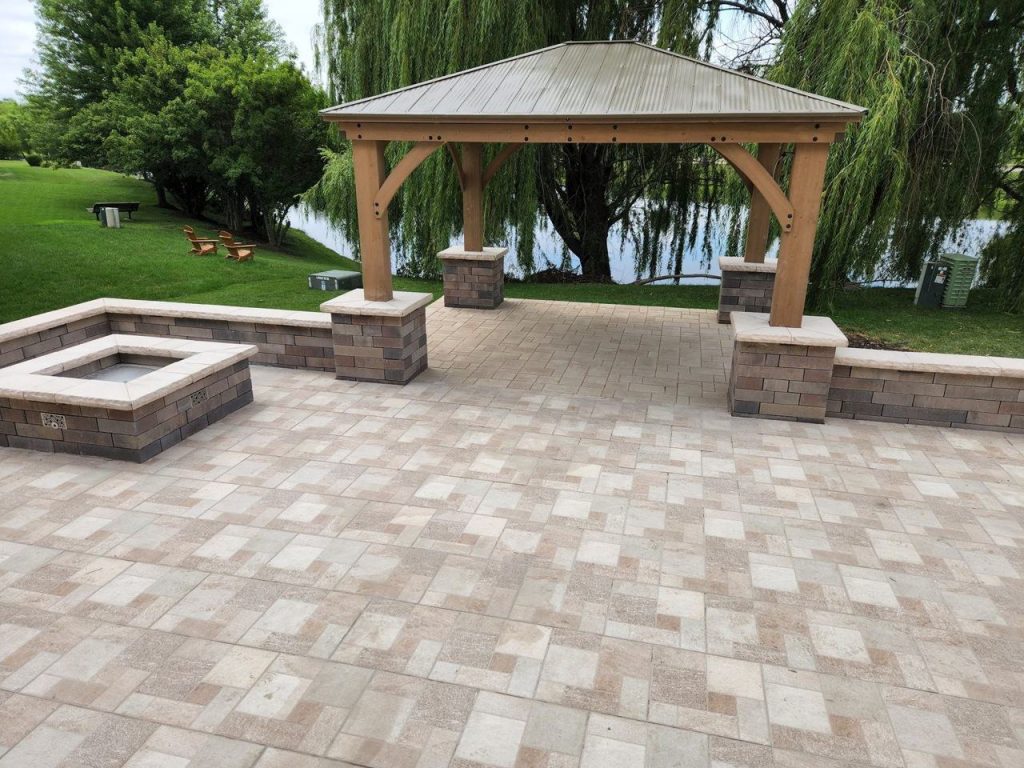
Both pavers and stamped concrete make great patios in the Northwest suburbs. The right pick depends on the look you want, your budget and how you feel about repairs years from now.
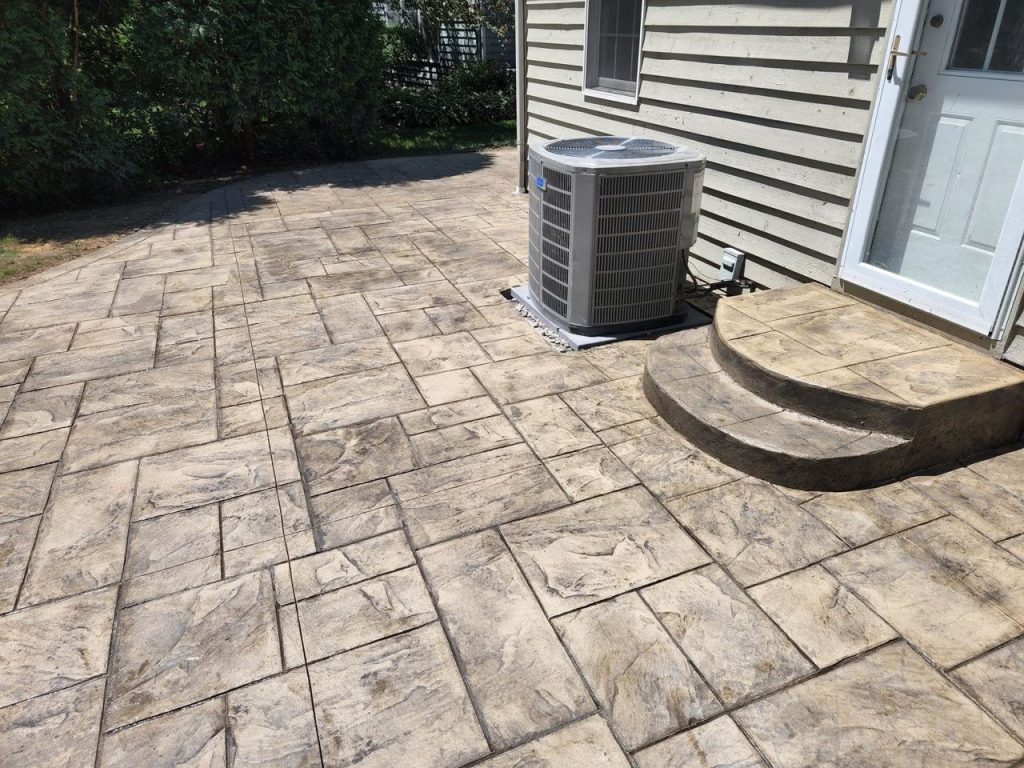
Pavers are individual units laid in a pattern, so you get real joints, texture and a wide range of colors and shapes. Stamped concrete is poured as one slab and pressed with a pattern that imitates stone, brick or slate. It can look very convincing, especially with added color.
Stamped concrete usually costs less upfront than pavers for the same area. Pavers take more labor to lay, but they can be a better long-term value if a section ever needs repair.
Chicago-area freeze-thaw cycles are hard on any surface. Pavers can move slightly at the joints without cracking, and a single damaged paver can be lifted and replaced. Concrete relies on control joints to guide cracks, and patches are hard to hide on a stamped surface.
Whichever you choose, the base matters most. Proper excavation and a compacted gravel base keep either surface flat for years.
Drainage
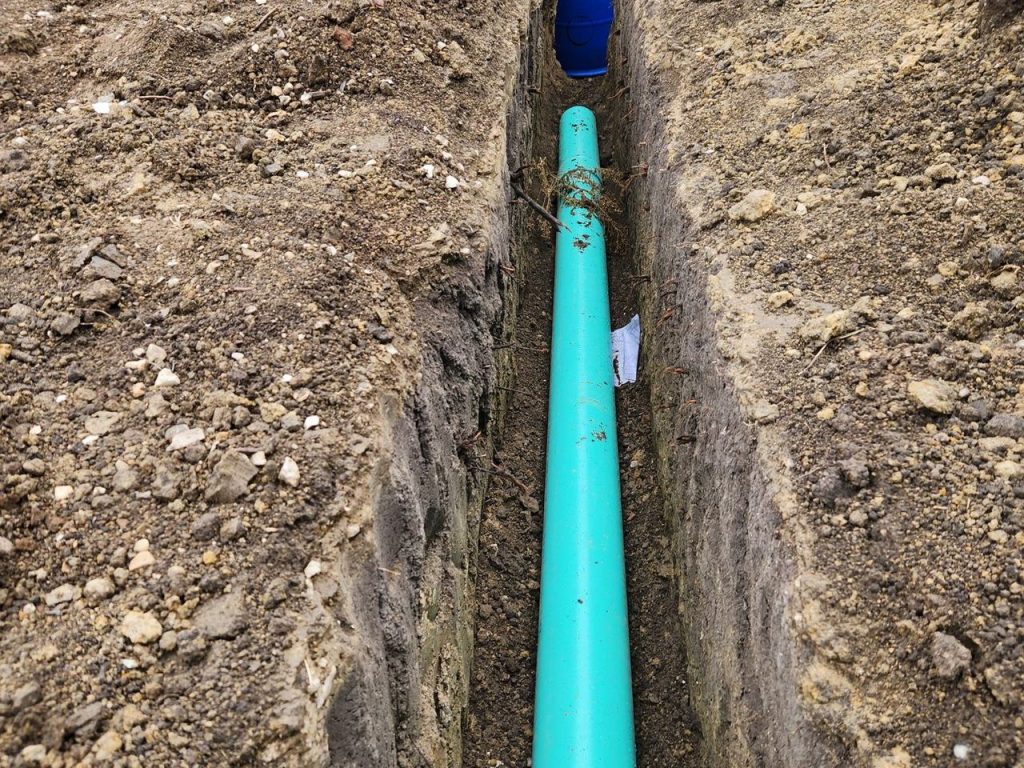
Heavy clay soil and flat lots are common around Palatine, and both make it easy for water to linger. Catching drainage problems early protects your lawn, patio and foundation.
If you’re planning a patio or new lawn, sort out drainage first. It’s much easier before anything is built on top.
Lawns
Both give you a new lawn. The difference is how fast you want it, how much you want to spend and when you’re starting.
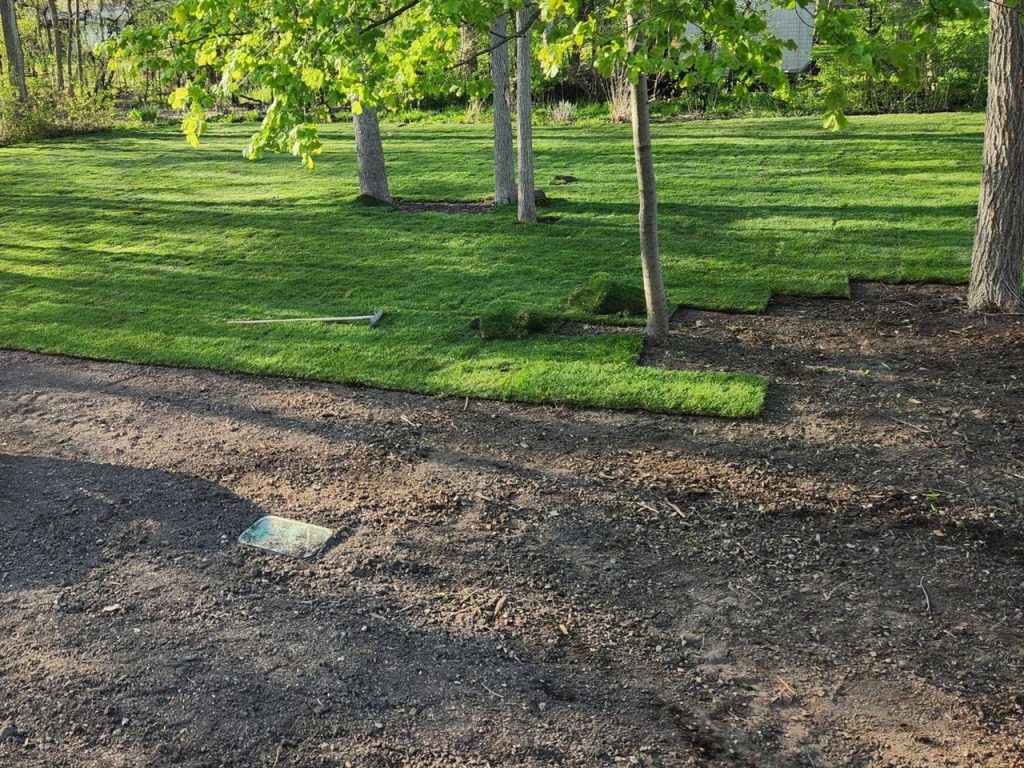
Sod gives you a finished-looking lawn the day it’s installed and holds soil in place right away, which helps on slopes and in areas prone to erosion. It costs more than seed and needs steady watering for the first couple of weeks while roots take hold.
Seed costs less and can be a good fit for large areas. It takes longer to fill in and needs consistent moisture while it sprouts. In northern Illinois, late summer into early fall is generally the best time to seed cool-season grass, with spring as a second option.
Landscaping
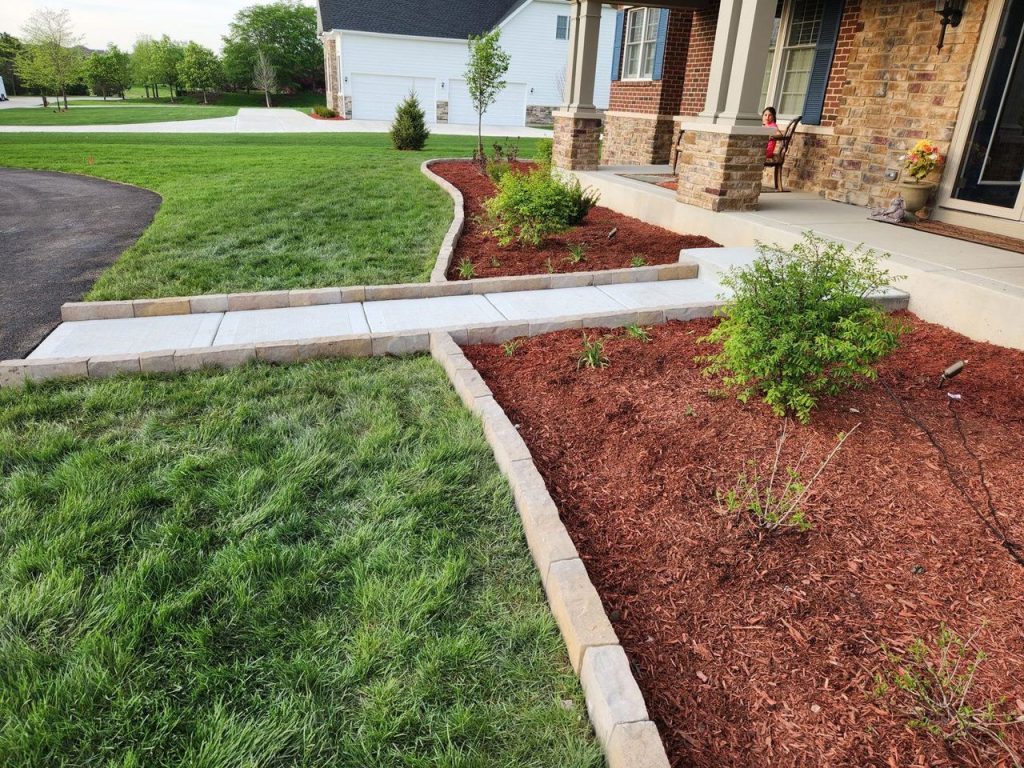
Fresh mulch makes beds look finished, holds in moisture and keeps weeds down. A few simple rules make sure it helps your plants instead of hurting them.
Spring is the most popular time to mulch, but a fall refresh helps protect plant roots through winter too.
Snow removal
Chicago-area winters are hard to predict, which makes choosing a snow removal plan feel like a guess. Here’s how the two options compare.
You agree on the service for the whole winter. It makes budgeting simple and means you don’t have to arrange service storm by storm. It suits homeowners who want a clear driveway all season without thinking about it.
You pay for each plowing visit. It can cost less in a mild winter and more in a heavy one. It suits homeowners who only need help after bigger storms.
Concrete
An epoxy coating turns dusty, stained concrete into a clean, durable floor that’s easy to sweep and mop. It’s a popular upgrade for garages and finished or unfinished basements.
Epoxy is only as good as its bond to the slab. The surface has to be cleaned and properly prepared, and cracks and damaged areas repaired, before coating. Moisture coming up through the slab is a common cause of peeling, so basements especially need a check before work starts.
If your garage floor is badly cracked or sunken, replacing that section of concrete first may be the better move.
Call, text or email for an estimate in Palatine and the Northwest suburbs.