
Mon–Fri 7 am–6 pm, Sat 7 am–12 pm, Sun closed
A French drain works only when the trench crosses water moving through the soil and has enough fall to reach an outlet. French drain installation services in Palatine, IL build that complete underground collection route.
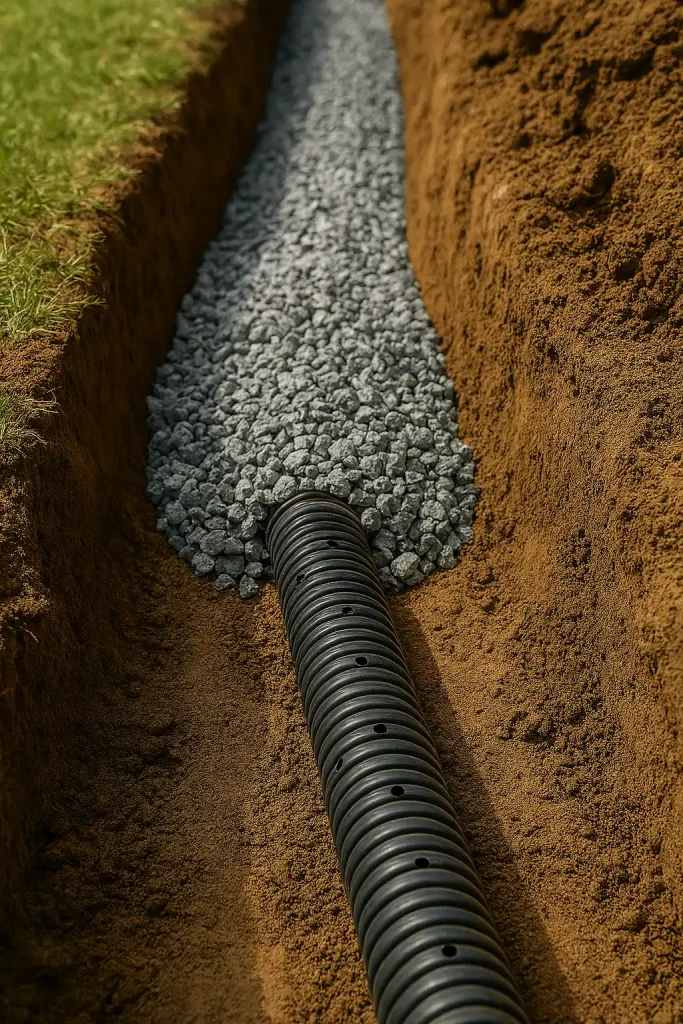
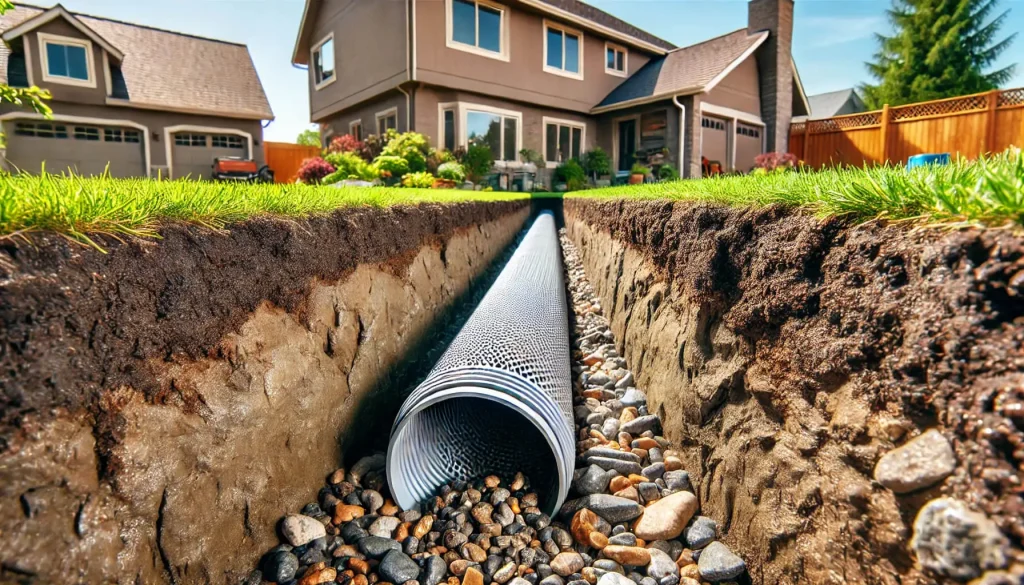
A French drain is a linear underground collector, not simply a pipe buried beneath wet grass. The trench needs to cross the path of seeping water so open drainage stone and perforated pipe can receive moisture along the route before it continues through saturated soil.
The complete system includes excavation, filter fabric, clean drainage stone, perforated pipe, continuous fall, and an outlet. Trench depth and outlet elevation matter as much as pipe size because every gallon entering the collector still needs a route away from the interception area.
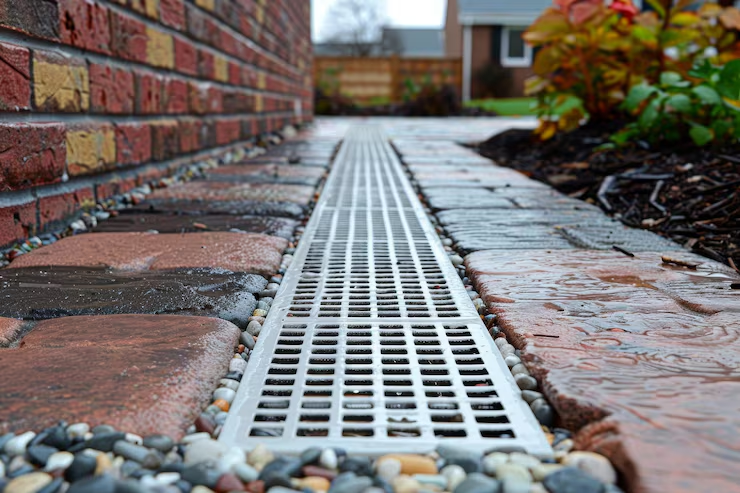
A French drain collects water along the length of the trench rather than through one surface opening. Moisture enters the drainage aggregate from surrounding soil, moves toward the collector pipe, and then travels downhill toward the outlet. Each component keeps that underground route open.
The trench needs to cross the path of unwanted water. Placing it beyond the saturated zone can leave the actual seepage route untouched while the lower yard stays wet.
Depth depends on where moisture needs interception and how much elevation remains between the collector and outlet. Digging deeper is not automatically better for drainage.
Geotextile separates native soil from the drainage aggregate while allowing water through. This limits soil fines entering the open spaces needed for water movement inside the trench.
Clean aggregate creates open voids around the collector. Water moves through those spaces much more freely than through compacted soil before reaching the perforated pipe.
Openings along the pipe admit water from the stone-filled trench. Collection therefore occurs across a longer underground line instead of depending on one drain inlet.
Once water enters the pipe, gravity needs to keep moving it. Reverse pitch and high points can leave sections holding water instead of carrying it toward discharge.
After the collection zone ends, solid pipe can carry captured water toward discharge without continuing to collect or release water along the remaining route.
The outlet needs enough elevation difference to receive the collected flow without sending water back toward the trench, another low spot, or an erosion-prone area.
French drain installation services in Palatine, IL can return the trench beneath the lawn or another suitable finished surface while preserving the stone-filled collector underneath.
A well-built collector still needs somewhere to send the water. The starting elevation, pipe fall, distance to discharge, and final outlet determine whether gravity can move captured water away. An outlet that sits too high can limit the system even when the trench itself is correctly assembled.
The collector begins where subsurface water needs interception. That starting depth also determines how much vertical drop remains available before the pipe reaches its final discharge point.
The underground route needs continuous fall toward discharge instead of following every rise and dip in the lawn surface above. Pipe elevation is established independently of appearance.
Collection and transport are different jobs. A perforated pipe serves the interception zone, while solid conveyance pipe can continue already captured water toward the selected outlet.
Concentrated discharge can wash exposed soil at the pipe end. The outlet area needs enough stability to receive flow without creating a new erosion or ponding problem.
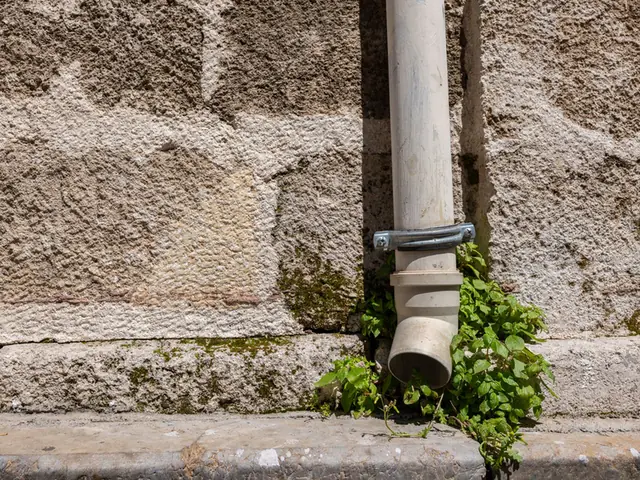
Both pipes can run underground, but they do different work. The perforated pipe receives water from the gravel-filled trench along its length. Solid pipe transports water that has already entered through a downspout, basin, sump connection, collector, or another defined inlet.
Pipe Decision
Perforated French Drain Pipe
Solid Drain Pipe
Primary Job
Collect Water Along The Route
Transport Collected Water
Pipe Wall
Contains Openings
Closed Pipe Wall
Water Entry
Through Stone And Perforations
Through Connected Inlet
Drainage Stone
Part Of Collection Zone
Not Needed For Pipe Collection
Typical Role
Subsurface Interception
Conveyance To Discharge
Main Question
Where Must Water Be Collected?
Where Must Captured Water Go?
One drainage project can use both. A perforated pipe handles the section where water needs interception, while solid pipe can continue from that collector toward a discharge point without collecting additional moisture along the route.
Starting excavation at the wet spot can produce a deep trench with nowhere useful to drain. The interception line, trench depth, pipe elevation, and discharge point should work together before the underground route is opened.
The proposed trench is positioned across the subsurface water path rather than simply following the outline of standing water visible at the lawn surface.
Outlet location and elevation are checked before final trench depth is set so collected water has a continuous gravity route beyond the wet area.
Excavation establishes the planned depth and fall while creating enough space for filter fabric, drainage aggregate, perforated pipe, and the surrounding collection zone.
R and R Landscaping and Design installs the fabric, drainage stone, collector pipe, and remaining aggregate while maintaining the planned underground route toward discharge.
Once collection and discharge are established, the trench is closed, and the disturbed surface is finished without blocking the drainage structure operating below grade.
Local Permit Note: Palatine requires permits for residential drainage projects, including grading or regrading and certain downspout or sump-pump connections to buried pipe, dry wells, or drain fields. Residential drainage projects are exempt from the Village’s pre-submittal meeting requirement.
A traditional French drain primarily receives water through the stone-filled trench from surrounding soil. Surface puddles can require grading, a swale, a catch basin, or another inlet depending on how runoff reaches the area. Installing perforated pipe below a puddle does not automatically correct the surface grade feeding it.
The trench should cross the path of the water that needs interception and still have enough elevation to drain toward an outlet. Wet-soil boundaries, slopes, seepage direction, utilities, surrounding hardscape, and discharge location all influence the route. Following the edge of a visible puddle alone is not enough.
There is no universal trench depth for every yard. Depth depends on where water is moving through the soil, pipe size, surrounding grade, utilities, root zones, and outlet elevation. A trench dug deeper than its available discharge can create a collection area without enough fall to empty properly.
Drainage fabric separates native soil from the clean aggregate while still allowing water to enter. Without separation, fine soil can migrate into the open spaces between stones and reduce the trench’s drainage capacity. The fabric protects the collection zone rather than acting as the component that carries water away.
Performance can decline when sediment enters the aggregate, soil fines fill drainage voids, the outlet becomes blocked, pipe sections lose fall, or roots and debris interfere with discharge. A wet area returning near an existing drain does not identify the failed component by itself, so the route and outlet need inspection.
Palatine requires permits for residential drainage projects and specifically regulates certain buried drainage connections and grade changes. French drain installation services in Palatine, IL should therefore account for the project’s excavation, discharge route, related grading, and any connected drainage components before installation begins.
Look beyond the restored lawn. The important details are where the trench crosses the wet zone, how elevation carries water downhill, where perforated collection ends, where conveyance begins, and how the final outlet handles discharge.
A buried collector addresses a specific water path. Surface runoff, widespread yard saturation, or several drainage sources can require work beyond the trench itself.
If surface runoff keeps feeding the interception area, landscape grading changes the slopes and low points, sending water toward that location.
Multiple water sources or uncertain discharge routes call for broader drainage services before one French drain is treated as the entire system.
When soggy conditions extend across several lawn areas, yard drainage solutions address the wider pattern rather than one underground interception line.
A gravel trench and perforated pipe only help when they intercept the water causing the problem and have enough fall to discharge it. Contact our landscaping team to check the trench route, outlet elevation, and surrounding grade before committing to the system.